During COVID-19, public health agencies relied heavily on data to understand where the virus was spreading and who was most at risk. While robust data have long underpinned decision-making, the pandemic reinforced that statistical factors – such as how data are grouped, how geographical boundaries are defined, and how granular the data are – can […]
Category Archives: Sustainability
AURIN, AURIN Network, Blog, Built Environment and Infrastructure, Data, Economics, Environment, Government, Housing, Industry, Land Use, Latest News, Research Impact, Resources for Research, Sustainability, Urban Development
Research Impact: AURIN data and infrastructure shaping a more sustainable urban future
Densifying the great Australian dream Owning a home is the great Australian dream. But as Australia’s population continues to grow, understanding how to plan and deliver housing is more important than ever. Urban planning therefore plays a critical role in government and industry decision-making, shaping where and how people live. Emeritus Professor Peter Newton […]
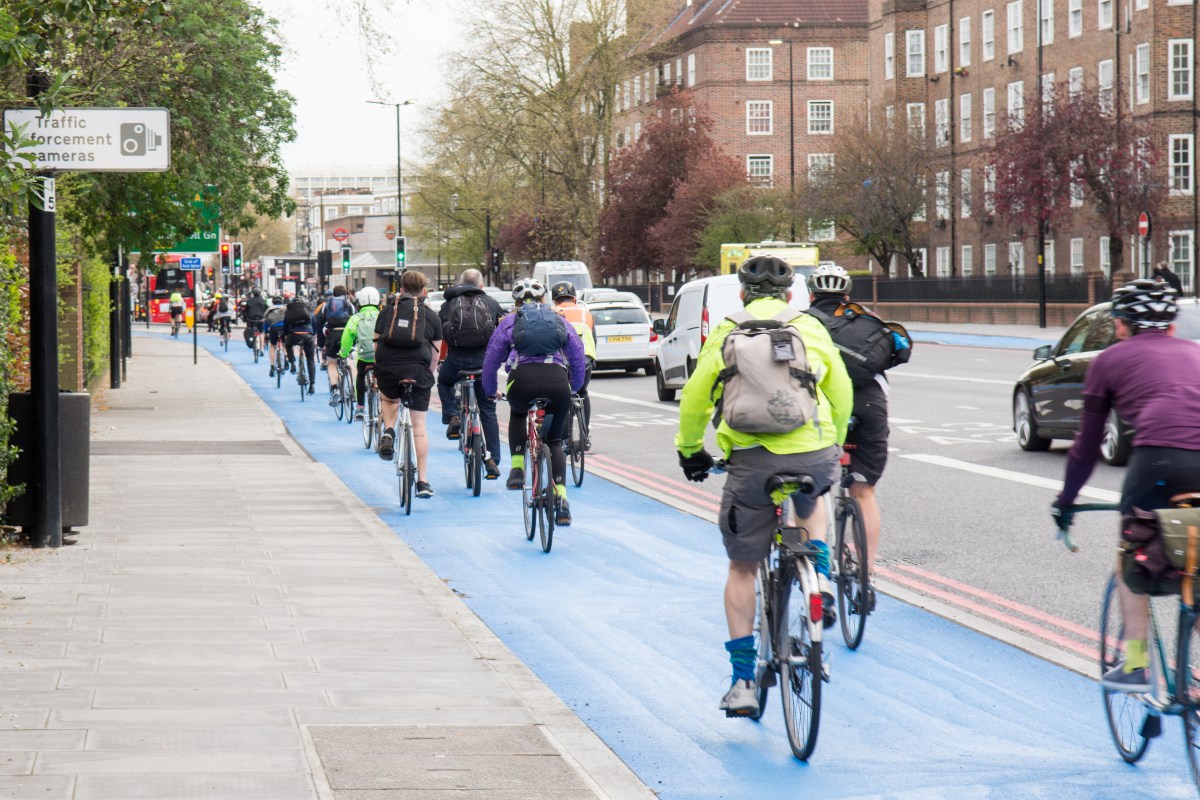
Across Australia, cities are looking for safer, easier ways to support cycling. ‘Bikeability’ describes how well an area supports cycling through its infrastructure, safety, environment and access to everyday destinations. But understanding what actually makes an area ‘bikeable’ is not straightforward. Until now, studies have used different definitions, indicators, and modelling approaches to explore bikeability, […]
The Australian Urban Research
Infrastructure Network (AURIN) and The University of Queensland have launched
URBANIQ – the AURIN Node for Urban Intelligence for Healthy & Equitable Places.
URBANiQ brings together researchers across The University of Queensland with expertise in health, health inequities, urban planning, geography, transport, and social sciences.
URBANiQ will harness AURIN mobility, environmental, and health data to respond to policy-led challenges to understand how the places we live, work, and socialise can promote urban liveability, facilitate healthy behaviour, and promote equity and sustainability.
Image: Professor Sharon Biermann (Director of PATREC) and Professor Pascal Perez (Director of AURIN) We are excited to announce our first AURIN Node, in partnership with the Planning and Transport Research Centre (PATREC) and located at the University of Western Australia (UWA). The AURIN WA Node is the product of our long-standing relationship with PATREC […]
We’re delighted to share that Dr. Aiden Price (QUT Senior Research Associate and AURIN Environmental Health Domain Expert), Annie Wu (AURIN Associate Data Engineer), Flavia Barar (AURIN Data Scientist), Jiaying Kou (AURIN Product Owner) and Emma Joughin (AURIN Head of Marketing) have won their thematic category in the UN World Data Forum’s 2024 ArcGIS StoryMaps […]
The latest Map of the Month, by project leaders Dr Thami Croeser (RMIT University) and Professor Michele Acuto (University of Melbourne), focuses on the impact of asphalt and concrete on urban heat islands, a phenomena which causes urban areas to be 4-10 degrees hotter than rural areas. With global temperatures continuing to rise, finding a […]
Urban heat islands are a significant environmental problem faced by cities worldwide. Higher urban temperatures can impact communities in a number of ways—increasing the concentration of air pollution, impairing water quality, increasing the demand for electricity, and causing heat-related morbidity and mortality. Urban overheating impacts low-income populations more since these populations often live in lower […]
Using cycling infrastructure data made available through AURIN, as well as data from Vicroads, the Victorian Government and the researchers’ own survey data, researchers at Monash University have conducted a study of the role of neighbourhood design in cycling activity during Melbourne’s Covid-19 lockdowns. Naseri, Delbosc and Kamruzzaman’s (2023) study, ‘The role of neighbourhood design […]
A digital twin is a virtual model designed to accurately represent a real world process or system. Urban digital twins provide a representation of our built environment, including infrastructure services and social dimensions, for data analytics and simulations that can be updated as their equivalents change. Digital twins can be used to test scenarios and […]
- 1
- 2