

AURIN is unlocking access to Domain property data for eligible researchers. Discover how it can support studies of housing costs, neighbourhood change and the challenges facing Australian communities.
Category Archives: Housing
Announcements, AURIN, AURIN Network, Blog, Built Environment and Infrastructure, Data, Demographics, Economics, Energy and Water, Environment, Government, Health, High Impact Projects, Housing, Industry, Latest News, News, Node, Regional, Research Impact, Resources for Research, Socioeconomics, Statistics, Sustainability, Transport, Urban Development
New Pilot AURIN Edge Program to Help Urban Research Move Further, Faster

01
Oct
Oct
AURIN Edge has opened its inaugural pilot round, giving eligible Australian researchers time-limited access to hard-to-get data and expert support. The program is designed to help projects with an identified user and a clear path to practical impact move forward.
Announcements, AURIN Network, Blog, Built Environment and Infrastructure, Data, Demographics, Economics, Energy and Water, Environment, Government, Health, Housing, Industry, Land Use, Latest News, News, Regional, Socioeconomics, Sustainability, Transport, Urban Development
Federal Investment in Research Infrastructure: Generating $1.5 Billion Value Annually.

08
Sep
Sep
AURIN is set to lead major new national research initiatives on urban climate risk and coastal monitoring, boosting Australia’s capacity for climate resilience, evidence-based planning and long-term decision-making.

19
Jun
Jun
AURIN is set to lead major new national research initiatives on urban climate risk and coastal monitoring, boosting Australia’s capacity for climate resilience, evidence-based planning and long-term decision-making.
AURIN, AURIN Network, Blog, Built Environment and Infrastructure, Data, Environment, Government, Health, Housing, Industry, Land Use, Latest News, News, Research Impact, Resources for Research, Statistics, Sustainability, Urban Development
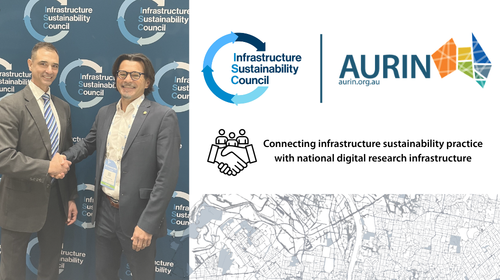
AURIN and Infrastructure Sustainability Council (ISC) partner to strengthen sustainable infrastructure research impact
11
Jun
Jun
AURIN now offers Healthdirect Australia’s 2025 NHSD through the ADP, giving researchers geocoded health service data to map access, equity, and resilience across Australia.
AURIN, AURIN Network, Blog, Built Environment and Infrastructure, Data, Economics, Environment, Government, Housing, Industry, Land Use, Latest News, Research Impact, Resources for Research, Sustainability, Urban Development
Research Impact: AURIN data and infrastructure shaping a more sustainable urban future

17
Dec
Dec
Densifying the great Australian dream Owning a home is the great Australian dream. But as Australia’s population continues to grow, understanding how to plan and deliver housing is more important than ever. Urban planning therefore plays a critical role in government and industry decision-making, shaping where and how people live. Emeritus Professor Peter Newton […]

25
Nov
Nov
Australian cities are facing more frequent and severe heatwaves, bushfires and floods due to climate change. However, while some communities have the resources to adapt to these extreme weather events, not all bear the burden equally. Households already experiencing disadvantage are often those most exposed to climate risks, and they have fewer financial buffers when […]

20
Nov
Nov
The Urban Data Futures initiative is the cornerstone of AURIN’s commitment to innovation and cross-sector collaboration; it equips emerging researchers with the power to apply data-driven solutions for the urban challenges of Australia. Empowering the next generation of researchers The Urban Data Futures initiative at AURIN equips data science students with data literacy, skills and […]

26
Jul
Jul
The Australian Urban Research
Infrastructure Network (AURIN) and The University of Queensland have launched
URBANIQ – the AURIN Node for Urban Intelligence for Healthy & Equitable Places.
URBANiQ brings together researchers across The University of Queensland with expertise in health, health inequities, urban planning, geography, transport, and social sciences.
URBANiQ will harness AURIN mobility, environmental, and health data to respond to policy-led challenges to understand how the places we live, work, and socialise can promote urban liveability, facilitate healthy behaviour, and promote equity and sustainability.

12
Feb
Feb
More children and young people are accessing schooling than at any other point in history. This is largely due to the pursuit of Sustainable Development Goal 4 (SGD4), which aims to “ensure inclusive and equitable quality education and promote lifelong learning opportunities for all.” In tandem with the millennial development goals, this has contributed to […]
- 1
- 2