

Australians are ageing at an unprecedented rate. As people get older, frailty and increased use of health resources pose a significant challenge to already strained health services. It is vital to keep ageing populations healthy to not only reduce this dependence on services but also to promote their wellbeing, independence, and participation in society. This […]
Category Archives: Built Environment and Infrastructure

24
Jun
Jun
From April to June 2024, AURIN was cited in a wide variety of material, including in eight papers published in peer-reviewed journals and two theses submitted for PhD programs. AURIN and datasets available through AURIN were used by researchers across Australia and internationally to inform analysis on residential mobility, road accident mitigation, school travel and […]

11
Jun
Jun
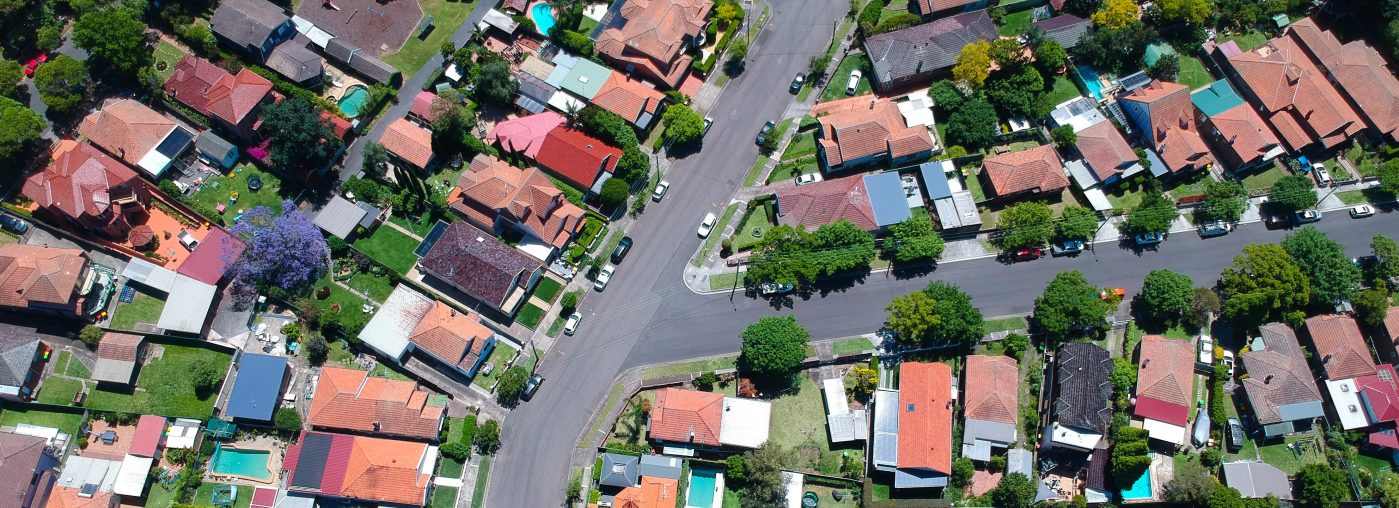
The 20-minute neighbourhood is a concept that evolved from the idea of the 15-minute city. The idea is that almost anything you need to access on a day-to-day basis—work, shopping, education, childcare, health services, green spaces and entertainment—should be within a 20 minute walk or bike ride from your house. 20-minute neighbourhoods feature in many […]
29
May
May
At a critical moment for housing policy and planning in Australia, UNSW on behalf of AURIN and Australian Research Data Commons has been awarded a two-year, $1 million grant by the office of the NSW Chief Scientist. This grant will allow for the development of the Housing Analytics Lab (HAL), a hybrid facility designed to […]

01
May
May
In May 2024 we’re excited to have members of our team attending two major industry events – the Geospatial Council of Australia’s Locate24 in Sydney and PIA’s Planning Congress in Melbourne. We’ll have an exhibition booth at both events, where you can meet experts from our team and learn more about how we can support […]

29
Apr
Apr
We’re so happy to announce our new Noise Mapping Datasets, developed in partnership with Ambient Maps and Geoscape Australia. Created by acoustic modelling experts, the datasets reimagine noise mapping in Australia—offering invaluable insights on the impact of noise on the urban environment. The datasets contain noise levels for each building throughout most of Australia. Noise values are generated […]
05
Apr
Apr
From January to March 2024 AURIN was cited in a variety of material, including in three papers published in peer-reviewed journals, one conference paper and one book chapter. Data accessed through AURIN was used by researchers across Australia and internationally to inform analysis on topics including transit-oriented development, the impacts of built environments on social […]

23
Jan
Jan
Using cycling infrastructure data made available through AURIN, as well as data from Vicroads, the Victorian Government and the researchers’ own survey data, researchers at Monash University have conducted a study of the role of neighbourhood design in cycling activity during Melbourne’s Covid-19 lockdowns. Naseri, Delbosc and Kamruzzaman’s (2023) study, ‘The role of neighbourhood design […]
17
Oct
Oct
From July to September 2023 AURIN was cited in a variety of material, including several conference papers and a peer-reviewed piece of research. The peer-reviewed paper, ‘A review on worldwide urban observatory systems’ data analytics themes: Lessons learned for Malaysia Urban Observatory (MUO)’, in Journal of Urban Management Vol. 12 Issue 3, was written by Noradila […]
17
Jul
Jul
From April to June 2023, data accessed through AURIN was cited in a wide variety of material, including in three papers published in peer-reviewed journals and one in a book of conference proceedings. These datasets were used by researchers across Australia and internationally to inform analysis on topics including walkability, public transport service quality, heat […]