

Four outstanding leaders in Australia’s geospatial community have been named finalists for the 2026 Peter Woodgate Award, recognising their contributions to collaboration, mentorship, leadership, innovation and impact across the profession.
The Peter Woodgate Award celebrates individuals whose work has strengthened Australia’s geospatial sector and reflects the values championed by the late Dr Peter Woodgate, a respected leader whose commitment to collaboration, innovation and developing others left a lasting legacy.
Presented annually by the Australian Urban Research Infrastructure Network (AURIN), the award recognises achievements that advance geospatial science, strengthen professional capability and deliver benefits to communities, industry, research and government.
The 2026 finalists represent an exceptional breadth of expertise, from geospatial health research and environmental intelligence to photogrammetry, geological modelling and international capacity building.
Each has demonstrated a commitment to applying geospatial knowledge to real-world challenges while creating opportunities for others and advancing the profession.
Annmarie Mabarrack
Head of Engagement and Growth and Environment Lead | FrontierSI
With more than 20 years of experience across government, research and industry, Annmarie Mabarrack has built a career connecting geospatial technology with practical solutions to environmental, social and organisational challenges.
Her nomination recognises her ability to establish productive partnerships across disciplines and sectors, bringing together expertise in Earth observation, spatial analytics, artificial intelligence and emerging technologies.
At FrontierSI, Annmarie has been instrumental in establishing Nature’s Digital Twin, developing the successful funding proposal, securing Victorian Government co-investment and bringing six organisations together to explore more continuous approaches to environmental monitoring. As Project Director for the First Floor Heights projects, she has also helped advance innovative methods to improve flood exposure assessment and resilience planning, with the initiative recognised at the 2025 Tasmanian Geospatial Excellence Awards.
Her contributions extend to public health through collaborations exploring new approaches to heatwave surveillance and health data analysis. Across her career, she has also led large multidisciplinary teams and complex transformation initiatives within government and industry.
Annmarie has made a sustained commitment to mentorship, inclusion and professional development. As a founding member of South Australian Women in Geospatial Science, a network that has grown to more than 90 members, she has helped create opportunities for women entering and progressing through the profession. Her mentoring activities span professional networks, universities, workplaces and school STEM programs.
Her selection as a 2026 Peter Woodgate Award finalist recognises the breadth of her collaborative leadership, her ability to translate emerging technologies into practical applications and her commitment to building an inclusive, connected and capable geospatial workforce.
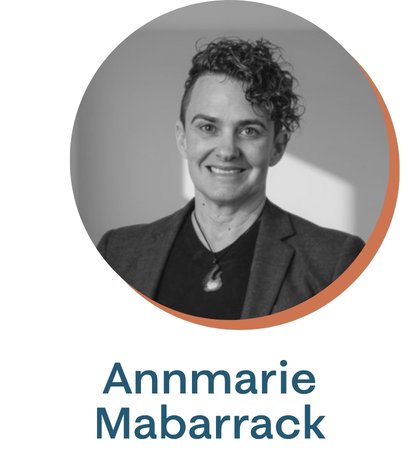
“I’m genuinely humbled that my peers have taken the time to recognise my contribution. I’m grateful to AURIN for honouring Peter Woodgate’s legacy, which continues to influence so many across our profession, including at FrontierSI. To stand alongside such accomplished finalists is an honour. I hope this recognition reminds others that their contributions matter. You can’t be what you can’t see.”
Professor Mark Jessell
Winthrop Professor | The University of Western Australia
Professor Mark Jessell is an internationally recognised geoscientist whose career has advanced geological modelling, open geospatial technologies and research collaboration across multiple continents.
His work has helped transform how geological information is integrated, analysed and represented in three dimensions, developing tools that make complex subsurface modelling more accessible, reproducible and useful for researchers, government geological surveys and industry.
Among his significant contributions is the development of Noddy, geological modelling software first created in the 1980s that continues to support research and innovation today. His ongoing leadership in the Loop project and associated open-source tools has further advanced automated 3D geological modelling, supporting new approaches to interpreting geological data and uncertainty.
Mark’s contribution to international collaboration is equally significant. He established the West African Exploration Initiative (WAXI), bringing together industry partners, geological surveys and universities across 13 West African countries. The initiative has delivered substantial geoscience datasets, regional mapping and thousands of person-days of technical training, establishing a model subsequently extended to South America and eastern Africa.
Throughout his career, Mark has supervised more than 40 higher-degree research students and contributed to the professional development of geoscientists internationally. His commitment to open science and capacity building has created tools, knowledge and institutional partnerships designed to remain valuable well beyond individual research projects.
His selection as a 2026 Peter Woodgate Award finalist recognises the enduring influence of his technical innovations, his exceptional international collaborations and his commitment to developing the next generation of geospatial and geoscience professionals.

“It is an unusual honour to even be considered for the Peter Woodgate Award. Although we work in different fields, it is clear that his passion for promoting geospatial sciences matches my own. The research programs I have worked on have always brought together scientists from different continents, so we are acutely aware of the space that divides us, but also brings us together.”
Professor Neil Coffee
Professor of Health Geography | Deakin University
Professor Neil Coffee has spent more than four decades advancing the application of geospatial science to population health, urban planning, accessibility and social inequality.
His career spans senior government positions, academic research and professional leadership, with a consistent focus on using spatial evidence to better understand how the places people live influence their health, opportunities and access to essential services.
Neil’s research has made significant contributions to spatial epidemiology, neighbourhood walkability, remoteness and geographic accessibility. His work on Cardiac ARIA helped establish new approaches to understanding access to cardiovascular services across rural and remote Australia, while his contributions to statistical geography and dwelling-level spatial analysis continue to improve the precision of population and accessibility research.
More recently, his work through the Centre for Australian Research into Access (CARA) has supported the development of high-resolution methods for analysing service accessibility and geographic inequality.
A defining feature of Neil’s contribution is his commitment to mentorship and education. He has helped establish GIS teaching and training across schools, universities and government agencies, supporting generations of students, researchers, teachers and geospatial practitioners.
His influence is reflected in the careers of those he has mentored, many of whom have gone on to make substantial contributions to research, education and professional practice.
Neil has also helped establish enduring professional networks, including the Institute of Australian Geographers’ Health Geography Study Group, creating opportunities for collaboration and knowledge sharing.
His selection as a 2026 Peter Woodgate Award finalist recognises his outstanding record of mentorship, sustained professional leadership and the lasting influence of his work in bringing geospatial science into public health research and policy.
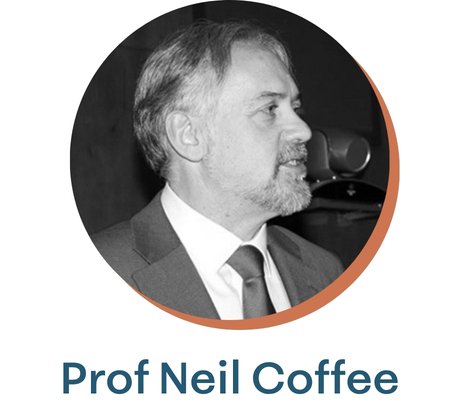
“When I started in this industry, I created maps using drafting equipment and Letraset. I saw the start of the computer mapping, did my first wire frame 3D map in 1986 using Autocad. Fast forward and I have been in this industry for over 40 years. It is an honour to be selected as a finalist for this award and the recognition of my lifetime working at something I am still passionate about.”
Associate Professor Petra Helmholz
Associate Professor, Earth and Planetary Sciences | Curtin University
Associate Professor Petra Helmholz has built an internationally recognised career advancing geospatial science through innovative applications of photogrammetry, remote sensing and spatial technologies.
Her work demonstrates the value of geospatial expertise across a remarkable range of disciplines, including healthcare, cultural heritage, environmental management, maritime archaeology and education.
Among her contributions are the Cliniface and SMAAT research programs, which apply 3D imaging, computer vision and spatial measurement to complex healthcare challenges, including rare disease assessment and speech analysis.
Petra has also led innovative approaches to documenting Indigenous rock art in the Pilbara and supported underwater photogrammetry and digital reconstruction of the HMAS Sydney II and HSK Kormoran wreck sites, creating valuable digital records for heritage preservation and research.
As Discipline Lead for Spatial Sciences at Curtin University, Petra combines research and education leadership with a strong commitment to developing future professionals. She has supervised and mentored more than 180 students and early-career researchers, supporting their progression into research, industry and professional leadership.
Her influence extends internationally through professional service and collaboration. Notably, Petra led Australia’s successful bid to host the 2029 International Society for Photogrammetry and Remote Sensing (ISPRS) Congress in Sydney, a significant achievement for Australia’s geospatial research community.
Her selection as a 2026 Peter Woodgate Award finalist recognises the diversity and societal value of her innovations, her extensive commitment to mentorship and her leadership in strengthening Australia’s national and international geospatial standing.
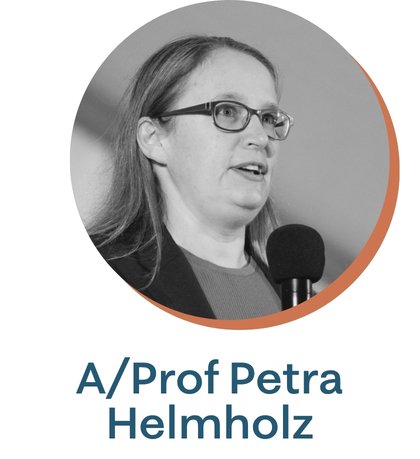
“I am honoured to be a finalist for the Peter Woodgate Award. I first met Peter as a visiting PhD student when he was CEO of CRCSI. Knowing his lasting legacy makes this recognition particularly meaningful, especially as I have sought in my own career to connect disciplines, people and geospatial innovation to create meaningful impact.”
Recognising leadership and lasting impact
Together, the four finalists demonstrate the breadth of geospatial science and its growing contribution to addressing complex challenges across Australia and internationally.
Their achievements reflect the principles at the heart of the Peter Woodgate Award: creating meaningful partnerships, supporting others to succeed, advancing innovation and ensuring geospatial knowledge delivers lasting benefits.
AURIN congratulates Annmarie Mabarrack, Mark Jessell, Neil Coffee and Petra Helmholz on their selection as 2026 Peter Woodgate Award finalists and acknowledges their outstanding contributions to the geospatial community.
We thank Carina Kemp, Zaffar Mohamed-Ghouse, Betty Moinet and Pascal Perez for serving on the 2026 Peter Woodgate Award judging panel. This year’s nominations highlighted the many ways nominees have strengthened Australia’s geospatial community, from developing new methods to mentoring colleagues. We’re grateful to the panel for the time and care they gave to reviewing each nomination and selecting this year’s four finalists.
The 2026 Peter Woodgate Award recipient will be announced at the Geospatial Excellence Awards dinner during Locate26 in Melbourne, 24–26 November 2026.