
The Australian Environmental Health (AusEnHealth) Strategic Planning Digital Twin has been awarded $1.9 million from the Medical Research Future Fund National Critical Research Infrastructure program.
The funding will go towards updates of the platform’s infrastructure and its public release. It will support the development of new analytical capabilities to improve decision-making support and it will allow for the integration of new climate and air pollution data sets and expand on other environmental health domains, such as mosquito-borne diseases.
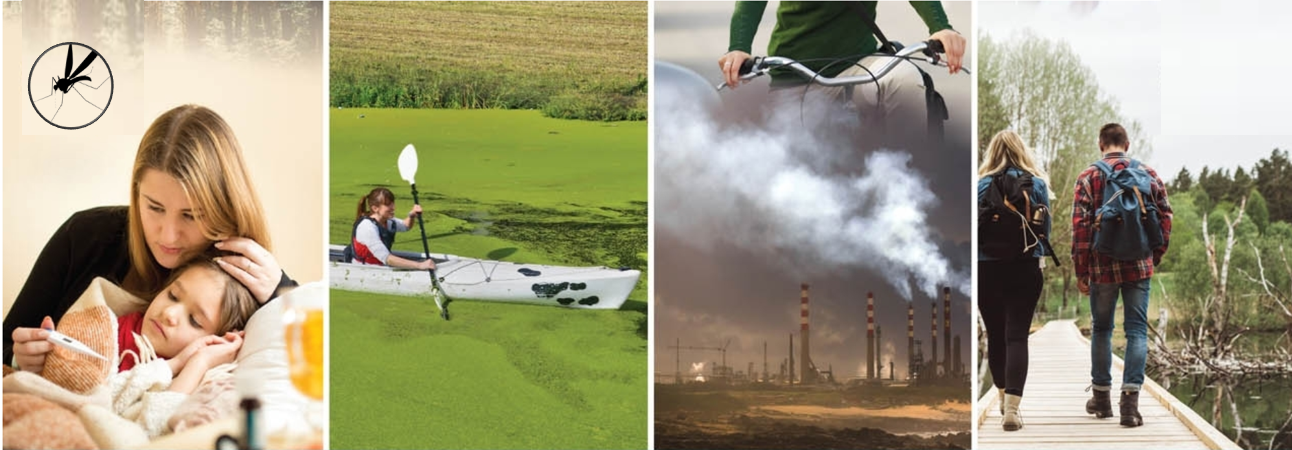
AusEnHealth is being designed to communicate how different areas in Australia are vulnerable to rising temperatures, extreme weather events, increasing Co2 emmissions, and social inequalities. The aim is to make the data more transparent for the public and to make it easier for policymakers to act.
Dr Aiden Price, AURIN’s Environmental Health Domain Specialist, said, ‘While a lot of data on this type of information exists, data sets are often fragmented, incomplete, and siloed, making it an extremely difficult and time-consuming process for any decision maker to get this data, let alone analyse it.’
‘It will speed up access to data for decision-making on climate mitigation and adaptation strategies such as access to cooler places, or cooling hubs. For members of the public, there will be the evidence for them to see, for example, that their area has a high heat risk and take mitigation steps.’
‘AusEnHealth will enable policy makers, planners, health managers, researchers and the public to access, visualise and analyse environmental health data. This will enable them to identify vulnerable populations, predict the future disease burden, and plan for a changing climate.’
The AusEn Health platform is a collaborative intiative led by FrontierSI and Queensland University of Technology, and supported by Qld Department of Natural Resources, Mining and Energy, Curtin University, Geoscience Australia, WA Department of Health, NGIS, Australian Urban Research Infrastructure Network (AURIN), Victorian Environmental Protection Authority, and Terrestrial Ecosystem Research Network and National Environmental Prediction System (TERN).
